Day Trip to Llanes and Ribadesella: Two Coastal Towns, Two Different Worlds
They sit less than thirty kilometres apart on the Cantabrian coast, and from Casa Llenín you can reach either in under an hour. But Llanes and Ribadesella are as different as two towns can be. Go to one and you learn something about Asturias. Go to both and you begin to understand it.
Llanes: walls, art and a painted harbour
Llanes announces itself with its walls. The medieval ramparts date from the thirteenth century, and long stretches still stand, enclosing a quarter of cobbled lanes, chapels and the grand houses of families who made their money in the Americas and came home to spend it.
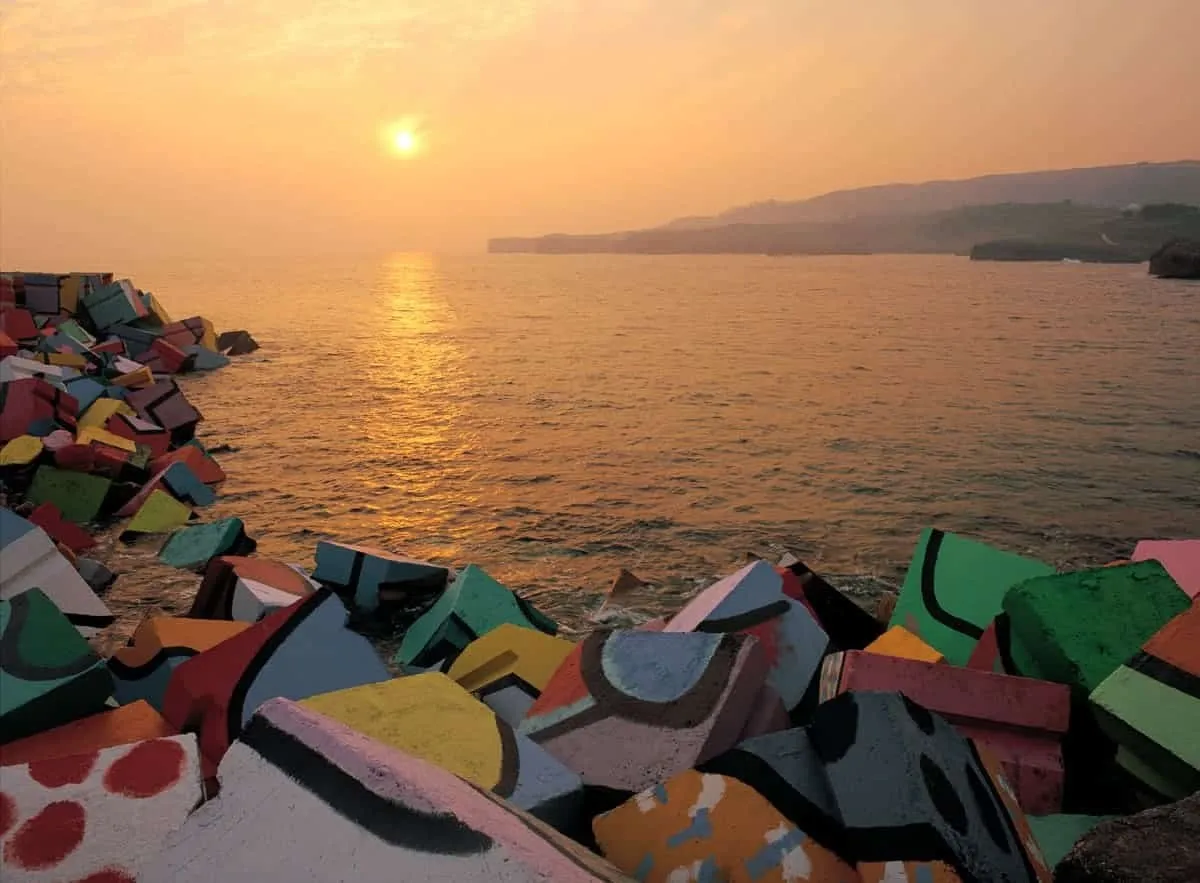
The harbour is where Llanes surprises you. In 2001 the Basque artist Agustín Ibarrola painted the huge concrete blocks of the breakwater in bold colours and geometric patterns. The result is the Cubos de la Memoria, an industrial sea defence turned into one of the most distinctive works of public art in northern Spain. It is free and always open. The best view is from the harbour mouth at low tide, when the whole work is uncovered.
Above the town, the Paseo de San Pedro is a clifftop lawn with a path along the edge and the sea a long way down. Walk it before lunch. Llanes eats well, and there is a market on Tuesdays.
Ribadesella: a working port and very old paintings
Ribadesella is quieter and, in some ways, more itself. The Sella estuary divides it in two. On one side is the old fishing port: narrow streets, a harbour front of tapas bars, and fish on the plate that left a boat that morning. On the other side of the bridge is a long curve of sand, backed by the mansions of the indianos, built by Asturians who returned rich from Cuba and Mexico and wanted everyone to know.
The Cueva de Tito Bustillo is one of the great Palaeolithic art sites in Europe. Horses, reindeer and signs were painted on its walls over thousands of years, and the oldest marks are thought to be more than 30,000 years old. Visitor numbers are strictly limited and the cave closes in winter, so book online well in advance. The museum beside it is open all year and is worth an hour on its own.
The Sella is also the river of the Descenso Internacional del Sella, the canoe race from Arriondas to Ribadesella held on the first Saturday of August. Around a thousand boats take part and the whole valley turns out to watch. If you are here that weekend, either join in or drive the other way.
How to make a day of it
Leave the house by nine and go to Llanes first: the walls, the Cubos, the clifftop path. Stop at the beach of Torimbia or Gulpiyuri on the way west if the sun is out. Have lunch at Güeyu Mar above Playa de Vega if you booked in time, or on the harbour front in Ribadesella if you did not. Spend the afternoon at the cave or on the sand, and drive home up the Sella valley through Arriondas.
Practical tips
- Driving times: Ribadesella is about 35 minutes from Casa Llenín, Llanes about 55. Between the two takes 25 minutes on the A-8.
- Tito Bustillo: book ahead on the Centro Tito Bustillo website. Guided visits only, small groups.
- Cubos de la Memoria: go at low tide. Evening light is best.
- Parking in Llanes: use the signed car parks at the edge of the old town. The centre is narrow and mostly pedestrian.
- Rain plan: the cave art museum in Ribadesella and a long lunch.
Then the road turns inland. In half an hour the sea is behind you, the valley narrows, and the Picos fill the windscreen again. That change, from harbour to mountain in the time it takes to finish a conversation, is the reason to stay where we are.